
Dire Straits
A Ceasefire doesn't stop the Economic Shockwave

We are very good at moving on. Sometimes that saves us. Sometimes it ruins us.
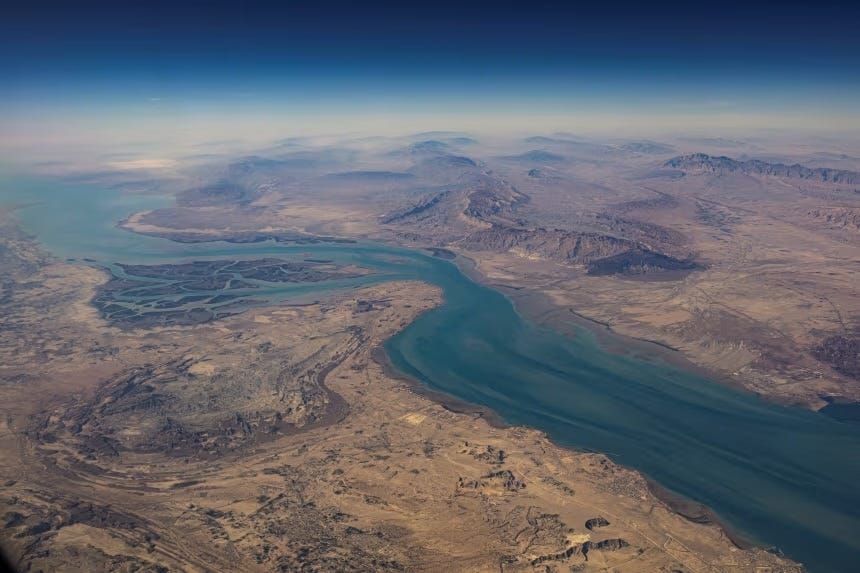
This is the first piece in Dire Straits, a short series on what to watch following the Iran war. From Qatar to Turkmenistan to the Arctic - we’ll look at where the tectonic plates meet, move and fracture and what that means for you: whether it’s the gas pump or drone defence.
It is part of Signals in the Dark: Field Notes for Uncertain Times, my field-notes series through Imrama Media.
In war zones and disaster zones all over the world, there’s a joke amongst my tribe: when you start doing the ‘what about the zoo animals in x crisis?’, it’s time to go home. We (not just journalists, all of us) go all in on one story. We get tunnel vision about everything (and everywhere else), and in our obsession with minutiae, we can miss the forest and the trees. And then…we’re bored. We want it to be over, and we want to move on.
And so it goes with the war between the US and Israel and Iran. There’s definitely a sense of ‘really, can’t we just move on?’ Or people thinking it’s over because the tempo has slowed, like a war-fly trapped in Amber. But no, we can’t. Because mighty forces have been unleashed, and once things begin to change, fast and slow (h/t Daniel Kahneman), they do not stop because of a big headline, or because we desperately want it to be over.
This is not one crisis, one moment. It is an accelerant. It is accelerating trends already in motion: the Gulf’s shift away from US security guarantees, the rise of alternative trade routes, the realignment of energy priorities, and the erosion of the foundations on which businesses and governments built their strategies.
The IEA calls it the largest supply disruption in the history of the global oil market;
I call it the Energy Pandemic.
Not to fearmonger. Or because it’s a perfect comparison. But it is useful.
A global that shock starts in one place, then runs through everything: fuel, food, shipping, fertiliser, travel, consumer confidence, work patterns, defence production, and the politics of who gets hurt and who gains.
Like the last pandemic, the pain and opportunity will not be evenly distributed.
Some will be squeezed.
Some will pivot.
Some will profit.
Some will pretend nothing has changed until the change arrives at their own front door.
In my experience, from wars, disasters, political shocks and recovery zones, the headline ending is rarely the real ending. It is usually the point at which the visible crisis changes shape.
The cameras move.
The statements are issued.
The market exhales (and inhales, and exhales again. in this case).
The public tries, understandably, to get back to normal.
But beneath that surface, other things keep moving.
Energy keeps moving.
Trade keeps moving.
Consumer fear keeps moving.
Political incentives keep moving.
The quiet scramble keeps moving.
Remember: this is not one crisis. It is an accelerant.
But one key caveat from years of observing conflict and disaster in the field: Humans are extraordinary at two things: adapting and forgetting. We adapt fast. We rebuild, find workarounds, get on with it.
We keep going brilliantly.
And then we forget why we had to do it in the first place.
We walk right back into the same exposure. COVID is the perfect example. Companies learned overnight to diversify supply chains, rethink work and shorten decision loops. They forgot. Entire societies changed overnight. They forgot.
That’s great for innovation and surviving crises.
It’s bad for pattern recognition and avoiding the same traps.
We want the headline to mean the story is over. But this is the time we need to pay attention.
It’s a trap to file any of this under “Thank goodness that’s over.”
So this series is about what you should pay attention to. Not as a firm predictor of the future, I do not believe in pretending certainty where there is none. But I have created a map of forces already moving, so we can ask better questions and make better decisions while the world remakes itself.
The question is not: can we move on now?
The question is: what is still moving underneath the surface?
And can we adapt quickly enough to the signals, without waiting for certainty that may arrive too late?

Three questions to ask yourself this week as we set our lens for the weeks ahead:
Which parts of your life depend on cheap, predictable energy or travel?
Which supply-chain or market-access assumptions have you taken for granted since the shock began?
What did you learn during COVID that you have quietly forgotten?
This is also part of the work I’m building through Imrama Media, a production and strategy studio for organisations working in complex, high-stakes environments.
We make films, shape narratives, and advise on soft power for clients whose work needs to hold up under real scrutiny: multilateral institutions, corporations operating in frontier markets, and leadership teams communicating through uncertainty.
If you need help seeing through the fog, get in touch.